RAVEL NOTES :
"WHY ANATOLIA "
The modern traveler no longer seeks only to discover a new destination; they also want to make that experience visible and meaningful.
Many destinations abroad captivate visitors with their carefully preserved cities, remarkable architecture, and rich cultural heritage.
But Anatolia is a world of its own.
Here, history is not a stage set on display—it is the story itself.
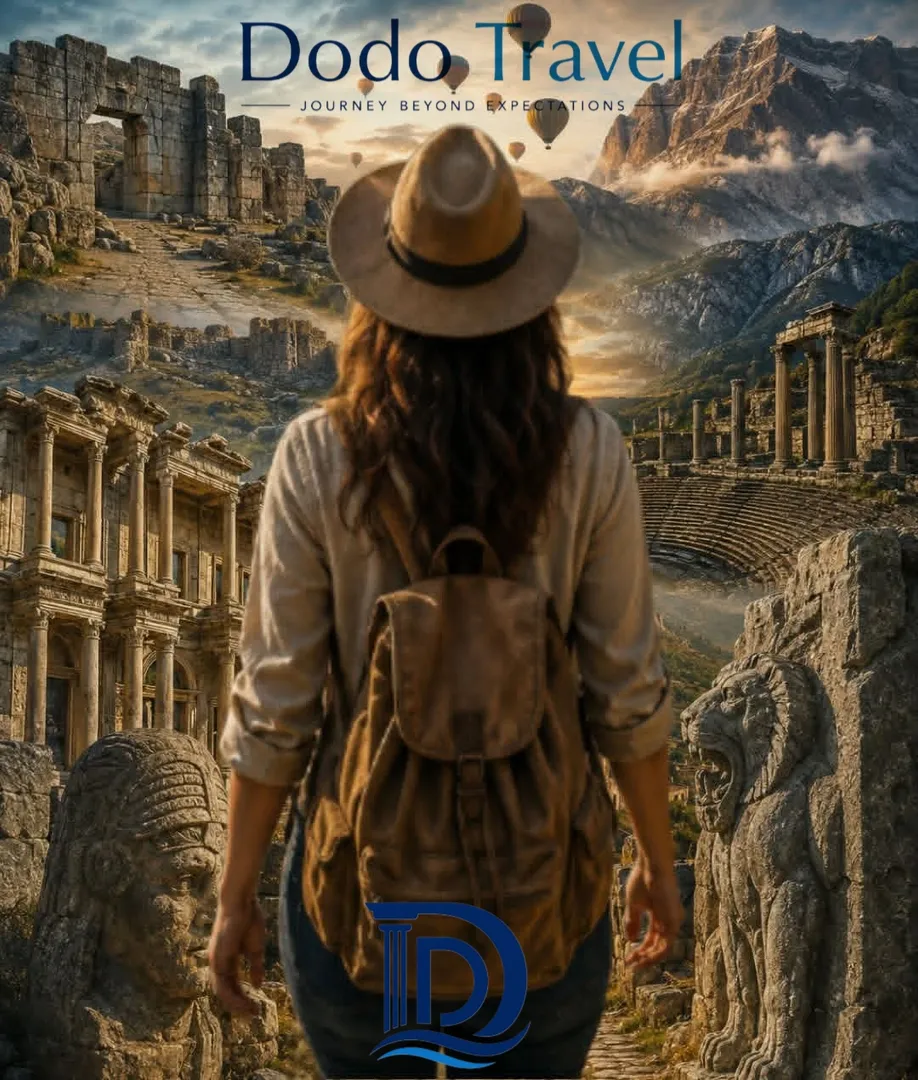
In Hattusa, near Çorum, you walk through the capital of a great empire. In Sagalassos, near Burdur, you discover a magnificent Roman city rising above the clouds. In Termessos, near Antalya, you feel the grandeur of an ancient city hidden deep within the mountains. In Aizanoi, near Kütahya, you witness the architectural elegance of Rome, while the Fairy Chimneys of Narman in Erzurum and Soğanlı Valley in Kayseri reveal the extraordinary natural heritage of Anatolia.
None of these places exists merely to be seen.
They are meant to be experienced—to be lived from within.
In Europe, you explore cities.
In Anatolia, you journey through the ages.
With every step, you find yourself walking among the legacies of civilizations stretching from the Hittites to Rome, from Byzantium to the Seljuks. In Anatolia, distances are measured not in kilometers, but in centuries.
The true strength of Anatolia lies in its extraordinary ability to preserve the layered legacy of the world's greatest civilizations within the same land.
Perhaps the real issue is not that Anatolia lacks a compelling story, but that we have never told that story to the world—or even to ourselves—with the power it deserves.
And perhaps the greatest journey for the modern traveler is not to another country at all.
It is the journey into the depths of human history.
That journey is Anatolia.